
The contemporary commercial landscape is undergoing a structural realignment driven by the maturation of generative artificial intelligence and a fundamental shift in the economics of customer acquisition. As traditional marketing paradigms—predicated on static segmentation and reactive campaign cycles—confront a period of diminishing returns, the necessity for a Growth Intelligence Engine has transitioned from a competitive advantage to an existential requirement. This transformation is catalyzed by the intersection of three macro-forces: the exponential rise in customer acquisition costs, the radical elevation of consumer expectations for hyper-personalization, and the emergence of autonomous, generative architectures capable of real-time adaptation.
The Paradigm Shift in the Generative Era
The generative era is defined by the transition from discriminative artificial intelligence—which focuses on classification and prediction based on historical patterns—to generative AI, which utilizes foundation models to synthesize new content, ideas, and strategic pathways. Generative AI is powered by large-scale neural networks, primarily transformer architectures, that have been trained on vast, diverse datasets to understand complex patterns in language, code, and multimodal data. This technological shift allows for the automation of creative and analytical tasks that were previously the exclusive domain of human cognition.
A Growth Intelligence Engine represents the operationalization of these capabilities into a unified system designed to drive sustainable revenue. Unlike legacy growth stacks, which often function as a collection of disconnected tools for email, analytics, and advertising, a Growth Intelligence Engine functions as a cohesive digital thread that connects every touchpoint in the consumer journey.It leverages the ability of generative models to process unstructured data—such as customer reviews, support transcripts, and social media interactions—to inform growth strategies with a level of granularity that traditional rule-based systems cannot replicate.
The Technical Foundation of Generative Growth
At the core of this transition are foundation models (FMs) and large language models (LLMs). These systems are trained on a broad spectrum of generalized and unlabeled data, enabling them to perform a wide variety of tasks including summarization, text generation, and information extraction.The architectural breakthrough that facilitates this is the transformer model, which utilizes an attention mechanism to learn the context of sequential data.This mechanism allows the engine to focus on specific parts of an input with different weights, improving the system’s ability to understand relationships between separated elements in a long data stream.
Component | Technical Function within the Growth Intelligence Engine | Strategic Impact |
Foundation Models (FMs) | Multi-task base models trained on massive, diverse datasets. | Enables out-of-the-box task performance with minimal training. |
Tokenization | Breaking text into smaller units (subwords) for numerical processing. | Essential for the model to capture syntax and semantic structure. |
Embedding Layer | Mapping input tokens into a high-dimensional semantic space. | Captures contextual relationships between disparate data points. |
Attention Mechanism | Assigning weights to input data based on relevance to the current task. | Improves understanding of long-range dependencies in customer behavior. |
Fine-Tuning | Adjusting model parameters on specific, labeled datasets. | Optimizes performance for domain-specific tasks like customer support. |
The mechanical advantage of these models lies in their ability to identify patterns in existing data through unsupervised or semi-supervised learning. For an organization, this means the Growth Intelligence Engine can “learn” the underlying structure of successful customer interactions and replicate them at scale. By processing vast amounts of unstructured content, the engine creates insights and answers in user-friendly formats, effectively serving as a companion for writing, research, and strategy.
The Economic Imperative: Addressing the CAC Crisis
The primary driver for adopting a Growth Intelligence Engine is the deteriorating state of unit economics in digital marketing. Between 2023 and 2026, customer acquisition costs (CAC) have escalated by 40% to 60%, propelled by heightened competition, stricter privacy regulations, and the rising price of digital advertising.In 2024, the median New CAC Ratio for software companies reached , meaning organizations are spending two dollars in sales and marketing to acquire a single dollar of new annual recurring revenue (ARR).
Industry Segment | Average CAC (2025/2026) | Median Sales Cycle | Target LTV:CAC Ratio |
B2B SaaS (General) |  | 3 – 6 Months |
|
Small Business SaaS | $$100 – | 1 – 3 Months |
|
Enterprise SaaS |  | 6 – 12+ Months | |
Higher Education |  | Varies |
|
Commercial Insurance | | Varies | |
Legal Services | $$ 1,150 – | Varies | |


The inability to sustain profitability under these conditions necessitates a shift in focus from broad-based acquisition to the maximization of Customer Lifetime Value (LTV) and the optimization of acquisition efficiency. The LTV represents the total revenue a customer generates over their entire relationship with the brand, and it is governed by a relationship between average revenue per user (ARPU), gross margin, and churn rate.13 A Growth Intelligence Engine directly impacts each variable in this equation.
Strategic CAC Reduction via Intelligence
Organizations utilizing AI-driven growth platforms have observed acquisition cost reductions of up to 50%. This is achieved through the elimination of wasted effort and the precision of targeting. For instance, approximately 27% of digital acquisition budgets are currently wasted on targeting existing customers because of poor identity resolution—essentially paying to acquire people who are already members of a loyalty program. Growth engines utilize AI to unify customer identities across platforms, potentially reducing CAC by an estimated 23% industry-wide.
Furthermore, predictive analytics can sift through historical customer data to uncover patterns that highlight which leads are most likely to convert. Instead of treating all leads equally, the system assigns scores based on demographics, behavior, and engagement levels.This allows sales teams to focus on high-priority leads, while automated systems nurture lower-priority ones until they are ready for direct outreach. AI-driven ad targeting can lift conversion rates by 25% compared to traditional segmentation methods, ensuring that every dollar spent is directed toward the most promising opportunities.
The implementation of conversational AI tools also addresses the problem of sales productivity.
By automating early-stage conversations, qualifying leads, and routing hot prospects to the sales team, these tools can increase sales productivity by up to 35%. The ability to operate 24/7 means businesses can capture leads outside regular working hours, tapping into international traffic or after-hours visitors that human representatives might otherwise miss.
Strategic CAC Reduction via Intelligence
Organizations utilizing AI-driven growth platforms have observed acquisition cost reductions of up to 50%. This is achieved through the elimination of wasted effort and the precision of targeting. For instance, approximately 27% of digital acquisition budgets are currently wasted on targeting existing customers because of poor identity resolution—essentially paying to acquire people who are already members of a loyalty program. Growth engines utilize AI to unify customer identities across platforms, potentially reducing CAC by an estimated 23% industry-wide.
Furthermore, predictive analytics can sift through historical customer data to uncover patterns that highlight which leads are most likely to convert. Instead of treating all leads equally, the system assigns scores based on demographics, behavior, and engagement levels.This allows sales teams to focus on high-priority leads, while automated systems nurture lower-priority ones until they are ready for direct outreach. AI-driven ad targeting can lift conversion rates by 25% compared to traditional segmentation methods, ensuring that every dollar spent is directed toward the most promising opportunities.
The implementation of conversational AI tools also addresses the problem of sales productivity.
By automating early-stage conversations, qualifying leads, and routing hot prospects to the sales team, these tools can increase sales productivity by up to 35%. The ability to operate 24/7 means businesses can capture leads outside regular working hours, tapping into international traffic or after-hours visitors that human representatives might otherwise miss.
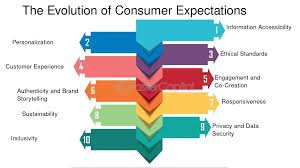
The Evolution of Consumer Expectations
By 2025, personalization has transitioned from a luxury to a foundational consumer requirement. Research indicates that 71% of consumers expect companies to offer personalized experiences, and 76% express frustration when these expectations remain unfulfilled.This shift is particularly acute as consumers move beyond keyword-based search toward multimodal experiences and expect brands to remember their preferences, anticipate their needs, and deliver customized content in real-time.
From Static Segmentation to Hyper-Personalization
Traditional personalization relied on static segments—grouping users by broad demographics. The Growth Intelligence Engine enables hyper-personalization, operating at the level of the individual by analyzing vast datasets including browsing behavior, purchase history, and contextual factors.6 Generative AI can process approximately 475 times more contextual variables simultaneously than legacy rule-based systems. This allows for the creation of dynamic, adaptive customer journeys that evolve in real-time based on live interactions.
Metric | Traditional Rule-Based Systems | Generative AI-Powered Systems |
Intent Accuracy | ~62% | ~89% |
Conversation Consistency | Baseline | ~94% |
Contextual Variables | Structured Data Only | Unstructured Data (Reviews, Chats) |
Engagement Rates | Baseline | 2.5x Higher |
Content Production Time | 100% (Baseline) | 35% (65% Reduction) |
In 2025, brands use AI to refine buyer personas and ideal customer profiles, crafting outreach strategies that align seamlessly with individual interests.19 This includes dynamic pricing that optimizes offers based on behavior patterns and AI-powered sentiment analysis that helps marketers fine-tune messaging based on customer emotions.
Impact on Customer Retention and Loyalty
The significance of this transformation extends to customer retention. Retaining a customer is significantly more cost-effective than acquiring a new one, as acquisition costs are 5 to 25 times higher than retention costs. A 10% increase in customer retention can lead to a 30% increase in the overall value of a company. Growth Intelligence Engines enhance retention by identifying early warning signs of churn through the analysis of data usage patterns, service quality metrics, and social media feedback.
- Retail Sector: Retailers like Sephora have used AI for sophisticated segmentation, resulting in a 25% increase in repeat purchases from high-value customers.
- Telecommunications: AT&T implemented predictive AI to forecast churn, leading to a 30% reduction in churn rates and a 20% increase in customer lifetime value.
- Finance Sector: JPMorgan Chase analyzed transaction history and demographics to predict LTV, resulting in a 15% increase in cross-selling and a 10% increase in LTV.
Real-Time Consumer Intent Mapping: RAG and Vector Databases
A critical component of a modern Growth Intelligence Engine is the ability to integrate real-time data with generative capabilities. While foundation models possess vast general knowledge, they are static and lack access to a brand’s private, up-to-the-minute information. This gap is bridged by Retrieval-Augmented Generation (RAG) and vector databases.
The Mechanism of Retrieval-Augmented Generation (RAG)
RAG is an architectural pattern that enhances the accuracy and relevance of LLM responses by retrieving data from an external knowledge base at the time a prompt is issued. The process involves several key steps:
- Data Augmentation: External data from document repositories, APIs, or databases is ingested and converted into numerical representations called embeddings using embedding language models.
- Vector Storage: These embeddings are stored in a vector database, which allows for efficient similarity searches.
- Inference and Retrieval: When a user submits a query, the system converts it into a vector and matches it with the most relevant information in the database using semantic search.
- Augmentation: The retrieved information is added to the original prompt, providing the LLM with the context necessary to generate an accurate, grounded response.
This approach is highly cost-effective compared to retraining foundation models, and it ensures that the AI can provide current information—such as the latest flight options, stock levels, or financial trends—grounded in authoritative sources.
The Role of Vector Databases in Marketing Technology
Vector databases enable low-latency queries, making them ideal for AI applications requiring real-time interaction.They deliver the speed and performance needed for recommendation systems and chatbots by performing sub-second similarity searches even at massive scale.Unlike traditional databases that rely on keyword matching, vector databases use mathematical vector calculations to find contextually relevant information.
Feature | Traditional Database | Vector Database |
Search Method | Exact Keyword Matching | Semantic Similarity |
Data Type | Structured/Relational | Unstructured (Text, Images, Video) |
Latency | High for complex queries | Sub-second for high-dimensional data |
Context Awareness | Low | High (captures semantic meaning) |
Use Case | Inventory management | Real-time personalization, RAG |
In e-commerce, real-time RAG ensures that inventory changes are reflected instantly in search results, minimizing the risk of selling unavailable products and improving customer satisfaction.This capability is essential for natural language search, as it interprets user intent beyond simple keywords, providing more accurate and diverse results.
Emergent Strategy and Automated Experimentation
In the generative era, growth strategy is shifting from a blueprint model—where humans define every step—to an emergent model, where systems are designed to discover optimal outcomes. This is operationalized through Layered Emergence Frameworks that automate the discovery of growth opportunities.
The Emergence Design Framework
The framework for building self-evolving growth systems consists of four critical layers:
- Sensing Infrastructure: Systems that constantly scan for weak signals, such as changes in browsing patterns or abandonment points, to discover new product categories before customers consciously demand them.
- Pattern Recognition Engine: AI agents that identify meaningful connections across data streams, such as feature combinations that correlate with high user retention.
- Hypothesis Generation: Instead of waiting for human insight, the AI proposes testable ideas about what might work next based on detected patterns.
- Adaptive Execution Infrastructure: Systems that can implement and test new capabilities, such as new conversation flows or messaging strategies, without human intervention.
This “Emergence Playbook” accelerates the learning velocity of an organization. By deploying comprehensive data collection and real-time pattern detection, companies can achieve 85% more breakthrough innovations and a 300% improvement in adaptation speed.
Learning Velocity as the New Moat
In a world where capital and APIs are commoditized, the primary durable advantage is how fast an organization can learn.Generative AI allows founders to run 10x more experiments at 1/10th the cost, simulating and testing ideas in days rather than months.Agentic AI can auto-conduct interviews, summarize user pain points, and identify which onboarding steps trigger drop-offs, turning feedback into a daily stream of actionable insights.
Capability | Traditional Growth Team | AI-Powered Growth Intelligence Engine |
Experiment Frequency | Monthly/Quarterly | Continuous/Daily |
Insight Loop | Post-mortem analysis | Real-time autonomous loops |
Research Method | Manual surveys/interviews | AI-simulated personas and scanning |
Response Speed | Weeks to implement changes | 48-hour idea-to-experiment cycles |
Scalability | Limited by headcount | Elastic capacity |
The modern founder builds systems that capture insights continuously, surface product gaps automatically, and learn from every action taken (or not taken) by users. This high-velocity experimentation ensures that the brand remains aligned with shifting market conditions and customer needs.
Breaking Internal Data Silos
A Growth Intelligence Engine requires a unified view of organizational data to function effectively. However, data is often stored according to organizational boundaries—marketing in one system, operations in another—creating isolated silos that isolate information. These silos hinder the seamless flow of information, leading to errors, unreliable results, and a lack of real-time decision-making capability.
The Hub-and-Spoke Integration Model
To address this, organizations are adopting hub-and-spoke platforms designed to integrate disparate technologies through open APIs. For example, the Pulse platform connects manufacturing execution systems (MES), ERP systems, and financial tools, translating and transforming data so that a bill of materials in one system matches a SKU in another. This allows for:
- Automated Data Integration: Reducing manual effort in data extraction and loading.
- Natural Language Processing (NLP): Using NLP to interpret unstructured data and integrate it with structured data, facilitating a unified view.
- Real-Time Data Access: Enabling agile decision-making by sharing information across departments instantaneously.
Cultural and Organizational Alignment
Silos are not just technical; they are cultural. When teams operate with different incentives and goals, cohesion is lost. AI success requires shared objectives, consistent governance, and trust in the data.Leaders must take a systems inventory to catalog every tool and data source, determining ownership and value. The goal should be to share data by default and restrict only by exception, using automated safeguards like attribute-based access control (ABAC) to ensure security without creating friction.
The Strategic Roadmap: Toward the Agentic Enterprise
The journey toward a fully realized Growth Intelligence Engine is characterized by increasing levels of autonomy. Global consulting leaders emphasize that AI is moving from pilot projects to real applications that must add to the bottom line.
Evolution of AI Autonomy (2025–2028)
The transition toward “agentic AI” represents a shift from decision-suggesting systems to actors that actually perform the work.
Capability | 2025 State (Point Solutions) | 2028 Projected State (Autonomous) |
Decision-Making | Primarily human-in-the-loop | Highly autonomous; proactive decisions |
Reasoning/Planning | Structured, short-term planning | Strategic, adaptive planning in ambiguity |
Task Complexity | Repetitive, rule-based tasks | Complex, multistep workflows |
Integration | Tech-heavy rollout of point solutions | Enterprise-wide low/no-code integration |
Learning | Learns from explicit feedback | Self-improving via reinforcement/observation |
By 2028, agentic assistants are projected to become autonomous partners that proactively shape decision-making and orchestrate complex workflows with specialized skills.Organizations that embrace this operating logic will release products faster and redeploy talent to higher-value work.
Next-Generation Operating Models
McKinsey suggests a three-part program to build a next-generation operating model:
- Designing the Roadmap: Aligning the target operating model with the transformation roadmap.
- Transforming Customer Journeys: Using design thinking to reinvent end-to-end user experiences for the most important journeys.
- Building Cross-Functional Foundations: Scaling agile and cross-functional approaches, such as digital factories, to sustain the benefits of the transformation.
The strongest AI strategies begin with the core business strategy, treating AI as the fuel rather than the end goal. This involves pushing clear objectives down to business leadership so they can identify opportunities within their divisions and work backward to apply AI solutions.34
Talent Infrastructure and the New Growth Roles
The rise of generative AI has created immense demand for a new class of talent that can manage the interaction between human intent and machine comprehension. The number of job vacancies with the term “generative AI” increased 36-fold in 2023.
The Role of the Prompt Engineer
Prompt engineering is the art and science of optimizing prompts to guide AI models toward precise, accurate, and contextually relevant outputs.35 This role is essential for ensuring that AI models produce high-quality responses for marketing, coding, and data analysis.
Key skills required for prompt engineering include:
- Understanding LLMs: Studying how language models process inputs and generate responses.
- Mastering Techniques: Learning zero-shot, few-shot, and chain-of-thought prompting to optimize output.
- Context Architecture: Refining prompts so they are understandable to AI agents, especially in non-technical roles.
- Programming Literacy: Knowledge of Python and NLP to help refine AI responses and integrate prompts into software.
- Creative Communication: Thinking out of the box to define questions and define conversational approaches that yield desired results.
Cross-Functional Collaboration
Prompt engineers do not work in isolation. They must be comfortable in cross-functional teams that include data scientists, engineers, writers, and marketers.Organizations are increasingly looking for professionals who can use prompt engineering to amplify productivity, automating tasks like copywriting, content creation, and data analysis.
Mitigating Algorithmic Bias and Ensuring Ethical Growth
The deployment of a Growth Intelligence Engine carries significant ethical responsibilities. AI systems, often trained on biased historical data, can perpetuate inequalities and discriminatory practices. A proactive approach is necessary to ensure equitable implementation.
Strategies for Bias Mitigation
Mitigating bias requires a holistic approach involving diverse datasets and enhanced transparency.Key strategies include:
- Diverse Research Teams: Inclusion of domain experts, data scientists, and members from underrepresented populations at the start of problem framing and hypothesis generation.
- Automated Bias Detection Tools:
- Google Fairness Indicators: An open-source toolkit to uncover disparities across demographic groups by evaluating accuracy rates and false positives.
- Amazon SageMaker Clarify: Analyzes datasets for imbalances before training and monitors model predictions after deployment, using SHAP values to explain drivers behind decisions.
- Human-in-the-Loop (HITL): Combining technical tools with human oversight. Diverse human reviewers identify nuanced biases, context stereotypes, or exclusionary language that automated systems might miss.
- Data Quality and Feature Engineering: Selecting features that minimize bias and ensuring that training data appropriately represents real-world use cases. Techniques like under-sampling or over-sampling can address data imbalances.
Mitigation Strategy | Operational Mechanism | Strategic Benefit |
Diverse Team Design | Inclusion of key stakeholders and underrepresented groups. | Prevents unintentional bias in the initial model hypothesis. |
Automated Auditing | Standardized frameworks for auditing algorithms. | Identifies discriminatory outcomes in decision-making. |
Feedback Loops | Continuous re-training based on human review and latest data. | Avoids model drift and maintains quality of recommendations. |
Averi AI Workflow | Content creation with assignable human review cycles. | Weaves bias mitigation directly into the marketing production process. |
Ensuring transparency and accountability in data collection and usage is essential to prevent AI from inadvertently reinforcing existing biases. By aligning AI development with principles of social justice, brands can harness the benefits of AI while mitigating potential injustices.
The Path Forward for Brands
The transition to a Growth Intelligence Engine is not a superficial addition to the marketing stack; it is a fundamental shift in how businesses create value. In an era where customer acquisition costs are rising and consumer expectations are characterized by a demand for hyper-personalization, the ability to process unstructured data, generate real-time insights, and automate experimentation is the only viable path to sustainable growth.
The implementation of RAG and vector databases provides the technical grounding for accuracy and relevance. Breaking internal data silos ensures that the engine is fueled by a comprehensive and accurate organizational memory. At the same time, the adoption of emergent strategies and a focus on learning velocity allow brands to adapt to an increasingly unpredictable marketplace. By investing in the right talent infrastructure and adhering to ethical standards, organizations can build a Growth Intelligence Engine that serves as the core operating system for the generative era. The brands that lead the way into 2025 and beyond will be those that prioritize AI-driven strategies, streamline workflows with automation, and create personalized experiences that resonate on a deeper, more meaningful level.