
Let’s be honest: the era of the “ten blue links” is fading. For twenty years, SEO was a simple game of ranking high to get clicks. But by 2026, everything has changed. Search engines have evolved into “Answer Engines” that don’t just point to information—they synthesize it for you.
If your content isn’t cited or recommended inside an AI-generated summary, your brand is effectively invisible. This shift is called Generative Engine Optimization (GEO). It’s not about replacing SEO; it’s about evolving your strategy to ensure your brand remains the “Source of Truth” in an AI-driven world.
From Clicks to Citations
The way people use the web has fundamentally changed. In early 2026, about 80% of high-intent searches end without a single click to a website. Users are getting their answers directly from the AI, which acts more like an analyst than a librarian.
For you, this means “Share of Model” is the new “Share of Voice. Success is no longer measured by where you rank in a list, but by how often the AI cites your brand to support its narrative.
Metric Dimension | Traditional SEO Focus | Generative Engine Optimization (GEO) Focus |
Primary Output | Ranked list of blue links. | AI-generated narrative with citations. |
User Interaction | Clicks through to a website. | Information consumed in-platform. |
Measurement | CTR, Organic Traffic, Rankings. | Citation Rate, Share of Model (SoM), Sentiment. |
Content Focus | Keyword density. | Fact density and “extractability.” |
Ranking Logic | PageRank and Domain Authority. | E-E-A-T and Semantic Consensus. |
How AI Sees You
To win at GEO, you have to understand the journey from a user’s prompt to the final answer. AI doesn’t just “index” your site; it evaluates it for specific “proof points” during the inference phase.
Figure 1: The GEO Authority Loop
[ User Prompt ]
↓
→ (Scans for Fact Density & Technical Justification)
↓
→ (Filters by Third-Party Validation & Mentions)
↓
→ (Extracts “Answer Blocks” for the final summary)
↓
→ (Your Brand is cited as the authority)
Making Your Site “Bot-Friendly”
If an AI bot can’t read your site, it can’t cite you. It’s that simple.
1. Kill the JavaScript Dependency
Many modern sites use heavy JavaScript that only loads content when a human scrolls. AI crawlers often miss this “hidden” text. If your core data—like pricing or expert claims—is stuck behind a slider or an accordion, it doesn’t exist to the AI. Moving to server-side rendering (SSR) is now a requirement for visibility.
2. Use the llms.txt Standard
Think of llms.txt as a clean “cheat sheet” for AI agents. Placed at your site’s root, this file provides a distraction-free summary of your authoritative content.18 It saves the AI “tokens” (computational cost), making it much more likely that an agent will prioritize your data over a cluttered competitor.
3. Nested Schema: The AI’s Roadmap
Schema markup is the primary language for AI systems. Using “nested” JSON-LD helps AI map relationships between your brand, your experts, and your products.Don’t just list an author; link them to their verifiable credentials using sameAs tags.This builds “Semantic Consensus”—proving your brand is a legitimate expert across the web.
Give the AI What it Wants
Traditional SEO content was often written for human skimmers.GEO content must be engineered for “synthesization”—making it easy for an AI to pull out facts and reassemble them into an answer.
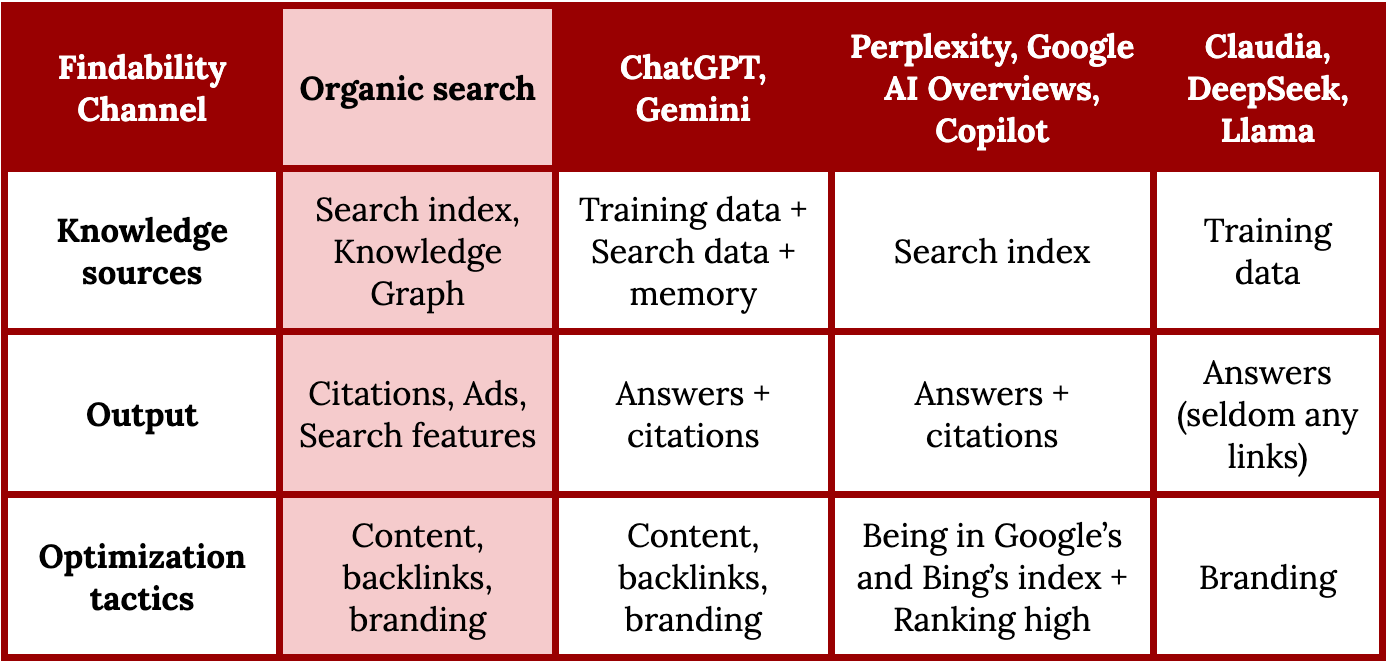
The “Answer Block” Strategy
AI attention mechanisms prioritize the beginning of text blocks.Use the “Inverted Pyramid” style: lead every section with a direct, 40-to-60-word answer (the “Answer Block”).Follow this with supporting data and specific nuance.
Use Technical Justification
Promotional fluff like “industry-leading” is a signal of low value to an AI. Replace it with “Technical Justification”—explaining the exact mechanism of how your solution works.Research shows that adding technical detail can boost your citation probability by up to 40%.
GEO Technique | Estimated Impact | Core Requirement |
Technical Justification | +40% Citation Rate. | Explain how, not just what. |
Statistics Addition | Very High. | Raw data every 150-200 words. |
Direct Quotations | +30-40% Visibility. | Use memorable, expert phrasing. |
Semantic Chunking | High. | Self-contained, claim-rich blocks. |
Multimedia as Machine Proof
AI in 2026 is multimodal—it “sees” images and “listens” to video to validate your text claims.
1. Visuals are Data, Not Decor
A proprietary chart or infographic provides “Information Gain” that an AI cannot hallucinate.Use descriptive alt text and captions to explain exactly what data your image is proving.
2. Video as Core Infrastructure
YouTube is now a primary search pillar, with 16% of AI answers citing video transcripts.
- Transcripts: Always provide full, clean transcripts.
- Chapters: Use timestamps to divide videos into “Answer Blocks” that AI can clip into summaries.
Featured Resource: The GEO Pivot Explainer
Source: Firebrand Marketing
Quick Summary: This video breaks down how to move from keyword targeting to intent mapping. It explains how structuring your video metadata allows AI models to treat your brand as a primary source during real-time retrieval.
Building Brand Gravity
The most important truth of 2026? Your own website is often the least cited source about your brand. AI engines triangulate information from everywhere else to decide if you are trustworthy.
The Power of Earned Media
Nearly half (48%) of all branded AI citations come from earned media—press, reviews, and forums. This is “Brand Gravity.” If high-authority sites, Reddit threads, and G2 reviews all consistently say you’re the best for a specific use case, the AI treats that as an immutable fact.
Reddit and Social Proof
AI systems love Reddit and Quora because they provide “human experience” that models lack.Brands that are actively discussed in niche subreddits see a massive spike in citation rates, especially for “customer review” queries.
Measuring What Matters: New KPIs
Since the “click” is no longer the only goal, you need a new hierarchy of metrics.
- Share of Model (SoM): The percentage of category responses that include your brand.
- Citation Precision: Tracking which specific “Answer Blocks” or claims the AI is pulling from your site.
- Branded Search Spike: A successful GEO strategy leads to more people searching for your brand name directly on Google after hearing about you in an AI chat.
Success Metric | Definition | Implementation |
AI Mention Share | % of category answers featuring you. | Monthly prompt audits. |
Citation Frequency | Total link count in AI answers. | Use tools like Semrush AIO. |
Sentiment Weight | How the AI “feels” about your brand. | Automated sentiment analysis. |
The 90-Day Transition Protocol
Ready to pivot? Follow this three-month roadmap to align your brand with the AI era.
- Days 1-30 (Technical): Fix your bots! Audit robots.txt, set up llms.txt, and overhaul your schema markup.
- Days 31-60 (Content): Restructure your high-value pages. Add “Answer Blocks” under H2 questions and inject original statistics everywhere.
- Days 61-90 (Authority): Seed the ecosystem. Focus on digital PR and community engagement on platforms the AI already trusts (Reddit, industry blogs, etc.).
The Bottom Line
GEO isn’t the end of SEO; it’s the evolution of it. Success in 2026 isn’t about being the loudest brand on the page—it’s about being the most indispensable source of truth in the AI’s knowledge graph. If you aren’t optimizing for comprehension, you’re simply not being found.